
- Home
- Dental guide
Dog and cat dentistry: a guide for owners

Everything about the teeth and mouth of dogs and cats in one place: how they work, how to look after them, which diseases occur and how they are treated.
Explained in plain words, with every topic leading to a detailed article.
In short
- Veterinary dentistry treats the teeth, gums, jaws and oral lining of dogs and cats: from prevention and check-ups to root canal treatment, surgery and injuries.
- Teeth: an adult dog has 42 permanent teeth and a cat 30; a puppy has 28 baby teeth and a kitten 26.
- Among the most common problems are periodontal disease (plaque, gingivitis, periodontitis), broken teeth and, in cats, tooth resorption (TR).
- Pets hide dental pain and keep eating, so problems are often found only at an examination.
- Most of a tooth is hidden below the gum: the full picture comes from an examination under anaesthesia with dental radiography (COHAT).
- The best prevention is daily brushing with a pet toothpaste, safe chews and regular check-ups.
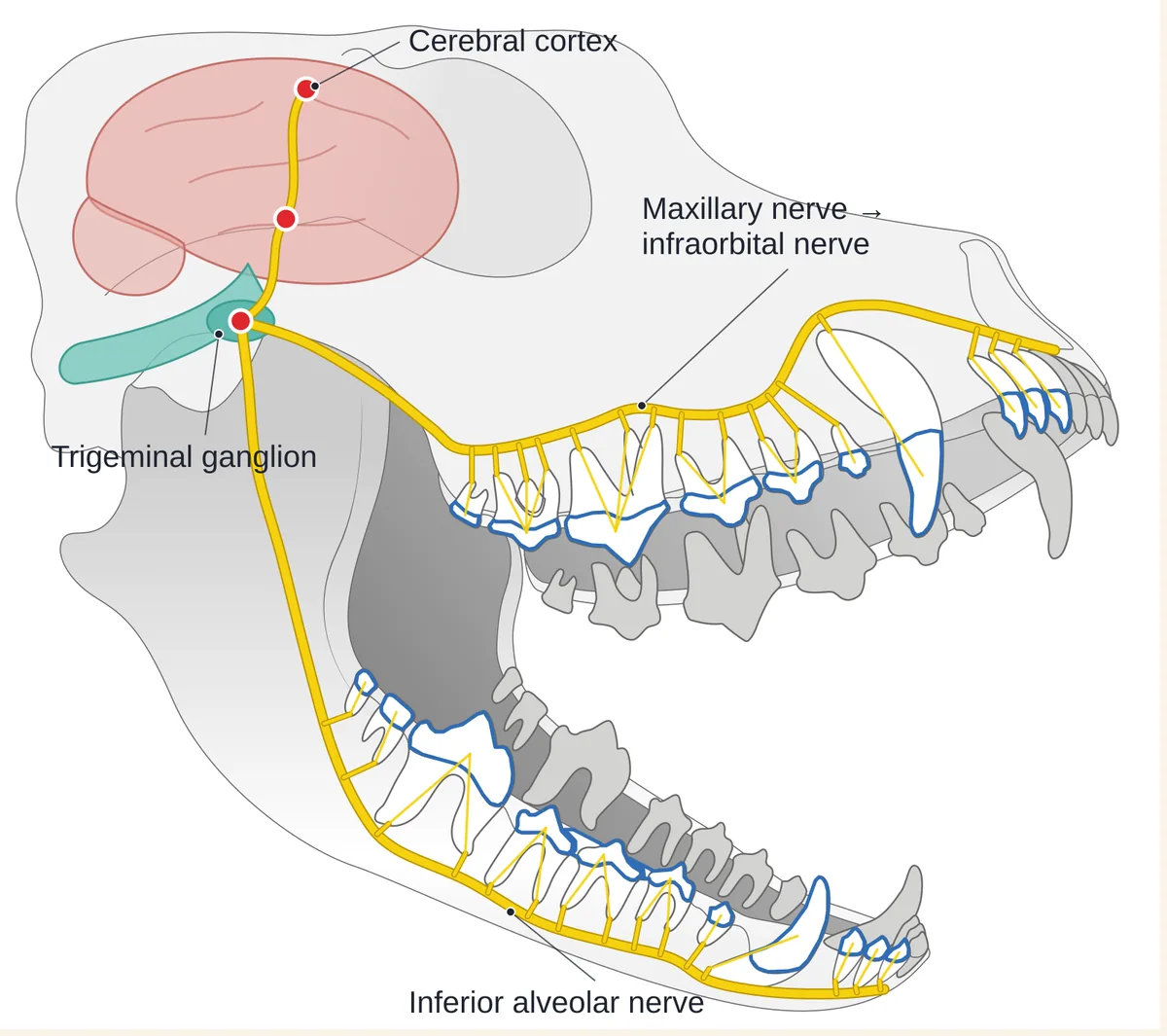 Start hereHow a dog’s and cat’s mouth works: nerves, blood supply, balance and the protective barrierFour diagrams on one skull: why a tooth hurts, how gum infection reaches the blood, what keeps the mouth healthy and what breaks its defences. The best introduction to the whole guide.Read the article →
01 · 9 articles
Anatomy and tooth development
How many teeth dogs and cats have, how they are built, when baby teeth are replaced and why each breed has its own weak spots.
- How a dog’s and cat’s mouth works: nerves, blood supply, balance and the protective barrier
- How many teeth do dogs and cats have? Dental formula and chart
- When do puppies lose their baby teeth? A teething calendar
- Kitten teething: timeline and what is normal
- Double canines in puppies
- Diagnosis and treatment of an unerupted tooth in a dog
- Malocclusion in puppies: when it's a problem and what to do
- Dental problems in small dog breeds: Yorkie, Russian Toy, Pomeranian, Chihuahua
- Brachycephalic dental issues: French bulldogs, pugs, Persian cats
02 · 10 articles
Prevention and home care
Daily brushing, safe chews, a monthly home mouth check and regular dental visits — what really protects teeth.
- How to brush a dog's teeth properly
- How to brush a cat's teeth
- How to check your dog’s or cat’s mouth at home: a monthly checklist
- Myths about dog and cat teeth: what is true and what is not
- Why you can't use human toothpaste
- Dental chews, sticks and dental diets: what actually works
- Which bones can dogs have — and which break teeth
- Removing dog tartar at home: what works and what does not
- How often does a dog need a dental check-up?
- How often does a cat need a dental check-up?
03 · 14 articles
Signs and symptoms
Dogs and cats hide pain and usually keep eating. Here is what to watch for: odour, blood, changes in eating, tooth colour.
- When should you see a veterinary dentist?
- Signs of tooth pain in dogs: how to tell and what to do
- Signs of tooth pain in cats: how to tell and what to do
- Why pets keep eating even with diseased teeth
- Why does my dog have bad breath?
- Why does my cat have bad breath?
- Acetone, urine or fishy breath: when it isn’t the teeth
- Why are my dog’s gums bleeding?
- Why are my cat’s gums bleeding?
- Why has a tooth changed colour?
- Yellow, brown and black teeth in dogs: what it means
- Why is my dog refusing dry food?
- Why does my cat only eat on one side?
- Why has my cat stopped grooming properly?
04 · 17 articles
Diseases of the teeth and mouth
From gingivitis and periodontitis to tooth resorption in cats, stomatitis and growths in the mouth: what they are, how they look and how they are treated.
- Gingivitis in dogs and cats: what it looks like, causes and treatment
- Periodontal disease in dogs: what it is, stages, symptoms and treatment
- What is periodontal disease in cats?
- Tartar in cats: why it forms and how it is removed
- Pulpitis in a dog or cat: signs, causes and treatment
- Tooth resorption in cats (TR): signs, stages, treatment
- Cavities in cats? Why it is usually tooth resorption
- Cavities in dogs: what tooth decay looks like, why it matters and how it is treated
- Stomatitis in cats: what it looks like, symptoms and treatment
- Stomatitis in dogs: what it looks like, why it hurts and how it is treated
- Why is my cat losing teeth? Causes and what to do
- Lip ulcer in cats: eosinophilic granuloma or a problem in the mouth?
- Diagnosis and treatment of an oronasal fistula in a dog
- Diagnosing a growth on the gums in a dog or cat
- Epulis in dogs: types, diagnosis and treatment
- Oral papillomas in dogs: why they appear, whether they are contagious and when to remove them
- Dark spot in a dog’s mouth: natural pigment or melanoma
05 · 19 articles
Diagnosis and treatment
What COHAT is and why X-rays matter, why treatment is done under anaesthesia, when a tooth can be saved and when it is better removed, and how to get through it calmly.
- What is COHAT and why is it more than a dental clean?
- Oral cavity treatment and COHAT
- Why do pets need dental X-rays?
- Why is dentistry done under anaesthesia?
- General anaesthesia for dogs and cats: is it safe?
- Anaesthesia for senior dogs and cats: can older pets have dental treatment?
- Anaesthesia-free dog teeth cleaning: why it is risky
- Can a broken tooth in a dog be saved?
- Can a broken tooth in a cat be saved?
- Tooth restoration (filling) in dogs
- When does a dog need a tooth extracted?
- When does a cat need a tooth extracted?
- Life for a cat without teeth after full-mouth extraction
- Pain relief for toothache in dogs and cats — and what not to give
- Antibiotics for dental disease: when they are needed and when they are not
- How to prepare a dog or cat for a dental procedure
- Aftercare following tooth extraction
- Online veterinary dentist consultation: when you are not in Kyiv
- How to choose a veterinary dentist
06 · 5 articles
Emergencies
A broken or knocked-out tooth, a jaw injury, swelling under the eye, blood from the mouth: what to do at once and when to see a vet without delay.
Useful tools
FAQ
How many teeth do dogs and cats have?
An adult dog has 42 permanent teeth and an adult cat 30. A puppy has 28 baby teeth and a kitten 26; they are replaced by permanent teeth at roughly 4 to 7 months.
Why is dental treatment in pets done under anaesthesia?
Most of a tooth is hidden below the gum, and every tooth can only be assessed, X-rayed and treated without pain or stress under monitored general anaesthesia. Anaesthesia-free cleaning removes visible tartar but cannot see or treat what lies below the gum.
How often should a dog or cat see a veterinary dentist?
At least once a year, and more often — as your vet advises — for pets that have had dental treatment, small and short-nosed breeds and cats with tooth resorption.
What can I do at home to keep my pet’s teeth healthy?
Brush the teeth daily with a pet toothpaste, choose chews you can dent with a fingernail, check the mouth once a month and don’t wait until your pet stops eating.