
Anaesthesia without unnecessary fear
I explain how preparation works, who monitors your pet, and what we do to keep treatment as controlled, pain-free and comfortable as possible.
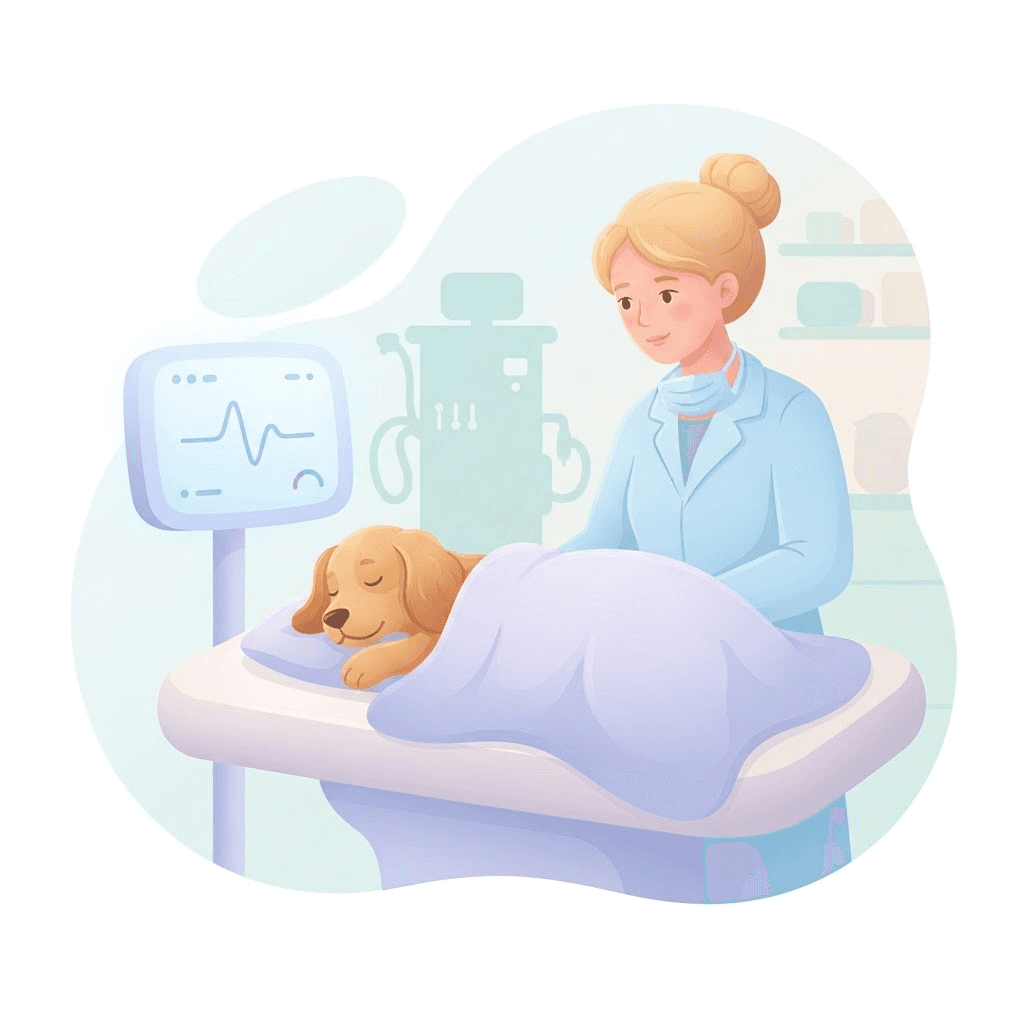
Why dental procedures are performed under anaesthesia
Complete veterinary dentistry is more than removing visible tartar. Every tooth needs to be examined, areas under the gums cleaned, periodontal assessment completed, high-quality dental radiographs taken, and treatment carried out safely.
Your pet needs to remain still, and the airway needs to be protected. That is why full dental procedures are performed under general anaesthesia with intubation and monitoring — as recommended by professional veterinary dentistry guidelines.
Who monitors your pet
What we monitor during the procedure
Continuous monitoring helps us spot changes early and keep the procedure controlled.
- breathing
- heart rate
- blood oxygen saturation
- blood pressure
- temperature
- the patient’s condition during recovery.
Local dental blocks
General anaesthesia does not mean we rely on it alone for pain control. Before painful steps, local dental blocks are placed — they interrupt the pain signal in the treatment area and help make the procedure and early recovery more comfortable.
Professional guidance notes that local blocks can reduce the need for inhalational anaesthetic and support more stable physiological readings.
Modern equipment
Modern equipment helps us work more precisely, with better control and less trauma. In specific cases this can streamline parts of treatment and create better conditions for recovery.
- endomotor;
- dental radiography;
- piezotome;
- Air Flow;
- a digital dental chart.
This does not guarantee shorter anaesthesia or faster healing in every case — instruments are chosen for the clinical situation.
Preparation for anaesthesia
The required scope of pre-operative investigations is determined individually. In my practice it may include:
- ✓complete blood count;
- ✓biochemistry blood panel;
- ✓echocardiography;
- ✓abdominal ultrasound;
- ✓other investigations depending on age, history, health status and the planned procedure.
The exact list depends on age, history, health status, concurrent disease and the planned procedure.
An honest word on risk
Can anaesthesia ever be completely safe?
Unfortunately, no anaesthesia can have zero risk. Animals are living beings, and even good test results cannot predict every individual response.
That is why we do not hide risk — we do everything we can to minimise it: assessing the patient in advance, choosing an individual protocol, continuously monitoring vital signs, and carefully supervising recovery.
Risk depends on the individual patient. For clinically healthy, screened animals it is usually much lower than for patients with concurrent disease.
How recovery works
After treatment ends, the anaesthesiologist continues to monitor your pet until recovery is stable. How quickly and how smoothly that happens depends on health, procedure length, body temperature and the protocol used.
Frequently asked questions
A complete professional cleaning with subgingival assessment, periodontal probing and dental radiographs cannot be done properly without anaesthesia. Without it the pet cannot stay still long enough, and the airway is not protected by intubation.
Age alone is not an absolute contraindication. Overall health, concurrent disease and pre-operative findings matter more. For older patients the protocol and checks are tailored individually.
Intubation protects the airway, allows control of breathing and oxygen, and reduces the risk of fluid or debris entering the airway while we work in the mouth.
A veterinary anaesthesiologist monitors the patient continuously: watching the readings, adjusting the protocol and supporting recovery.
Before planned anaesthesia we usually need a CBC, biochemistry, echocardiography and abdominal ultrasound. Extra tests may be added when indicated. More detail is on the consultation and preparation page.
They reduce pain in the treatment area, support a more comfortable start to recovery, and can lower the need for inhalational anaesthetic.
The anaesthesiologist stays with the patient until recovery is stable. Timing depends on health, procedure length, temperature and protocol.
Questions about anaesthesia?
Message me on Telegram — I’ll help you decide whether a consultation is needed and where to start.